
In the late 1980s, Zurich had a problem visible from the street. The Platzspitz — a green island between two rivers, metres from the Swiss National Museum — had become one of Europe's most concentrated open drug scenes. Thousands of heroin-dependent people gathered there daily. HIV infections, spread through shared needles, were reaching epidemic levels: by 1986, Switzerland recorded approximately 500 cases per million inhabitants, the highest rate in Western Europe. By the end of the decade, half of all new HIV infections in the country were attributable to intravenous drug use.
Conventional treatment was failing the people who needed it most.
The Swiss response, launched as a pilot in 1994, was to prescribe heroin itself — pharmaceutical-grade diacetylmorphine — to patients who had not responded to methadone or other substitution therapies. The logic was not permissive. It was corrective. Where the conventional healthcare system failed, the state intervened with a tightly regulated alternative: not a concession to drug use, but a targeted correction of a market failure with measurable social costs.
How the programme works
Patients do not take the drug home. They visit one of the authorised clinics — up to twice daily, every day — where diacetylmorphine is administered under direct medical supervision. Eligibility is narrow: severe, long-term dependence, documented failure of prior treatments, and significant physical, psychological, or social consequences from continued use. This is not a low-threshold service. It is the end of the therapeutic line.
The pilot ran for three years. Results were sufficiently positive that in 1997 the programme was expanded, eventually reaching an estimated 15% of Switzerland's heroin-using population. In 2008, after more than a decade of experimental application, heroin-assisted treatment was permanently integrated into federal law — the Legge federale sugli stupefacenti e le sostanze psicotrope (LStup, RS 812.121) — through a referendum approved by 68% of Swiss voters.
By 2022, 1,801 patients were enrolled across 22 specialised clinics and one prison facility, against approximately 16,300 patients in conventional substitution treatments. The average age of HAT patients — 49.6 years, compared to 46.5 in traditional programmes — signals something worth noting: this is a population that has been in the system for a long time, cycling through treatments that were not working.
What the evidence shows
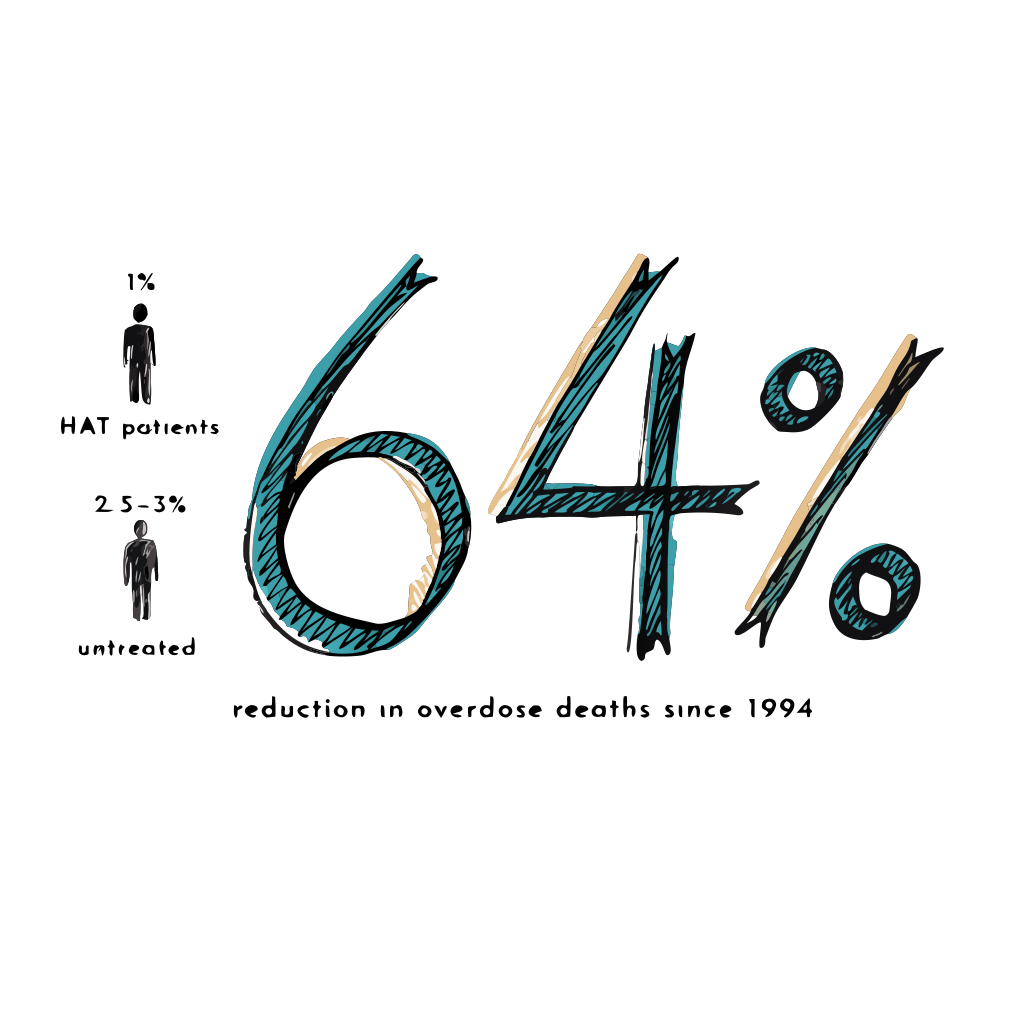
The outcomes are documented across randomised controlled trials, longitudinal follow-ups, and national statistics. In the early years of the programme, the annual mortality rate among HAT patients was approximately 1%, compared to 2.5–3% among untreated heroin users. Overdose deaths fell by 64% relative to the pre-1994 peak. A 2001 follow-up study in The Lancet confirmed the feasibility, safety, and efficacy of injectable heroin prescription across a refractory patient population — people, by definition, for whom nothing else had worked.
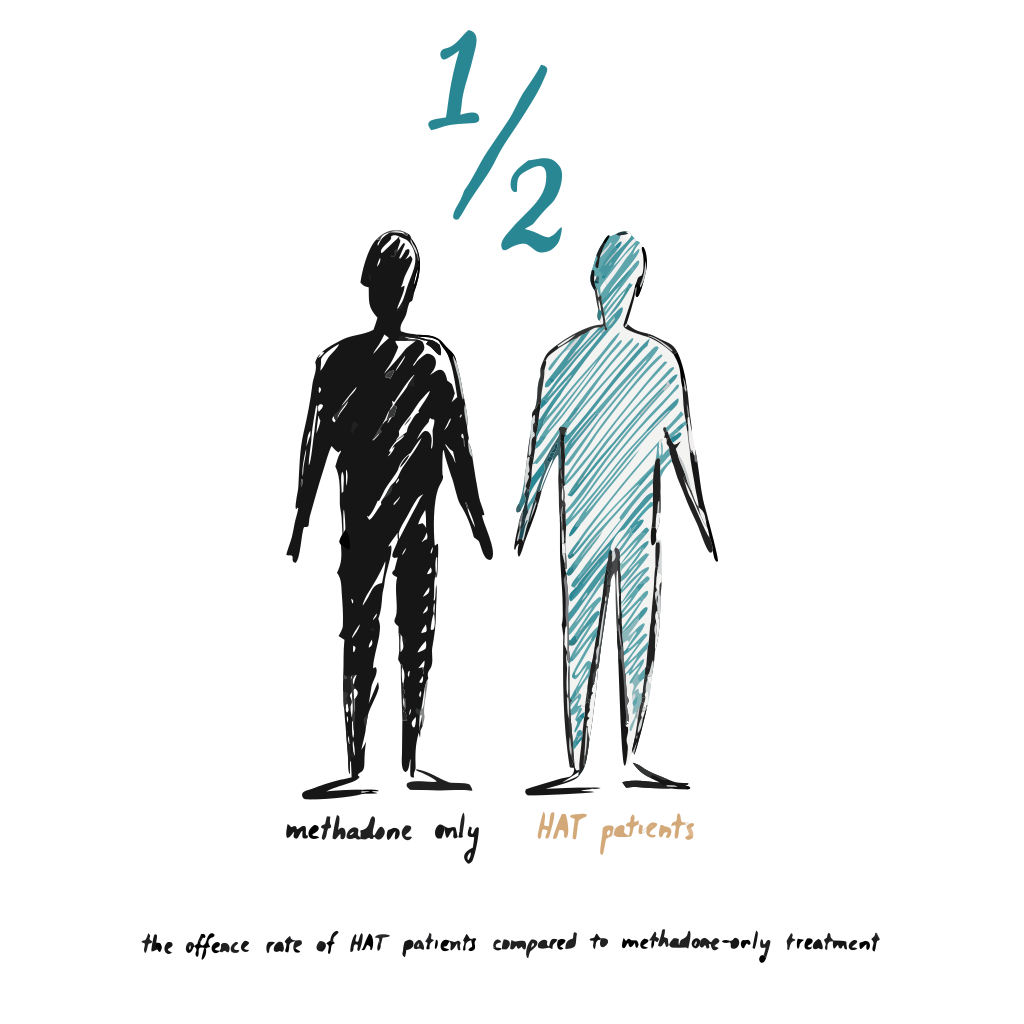
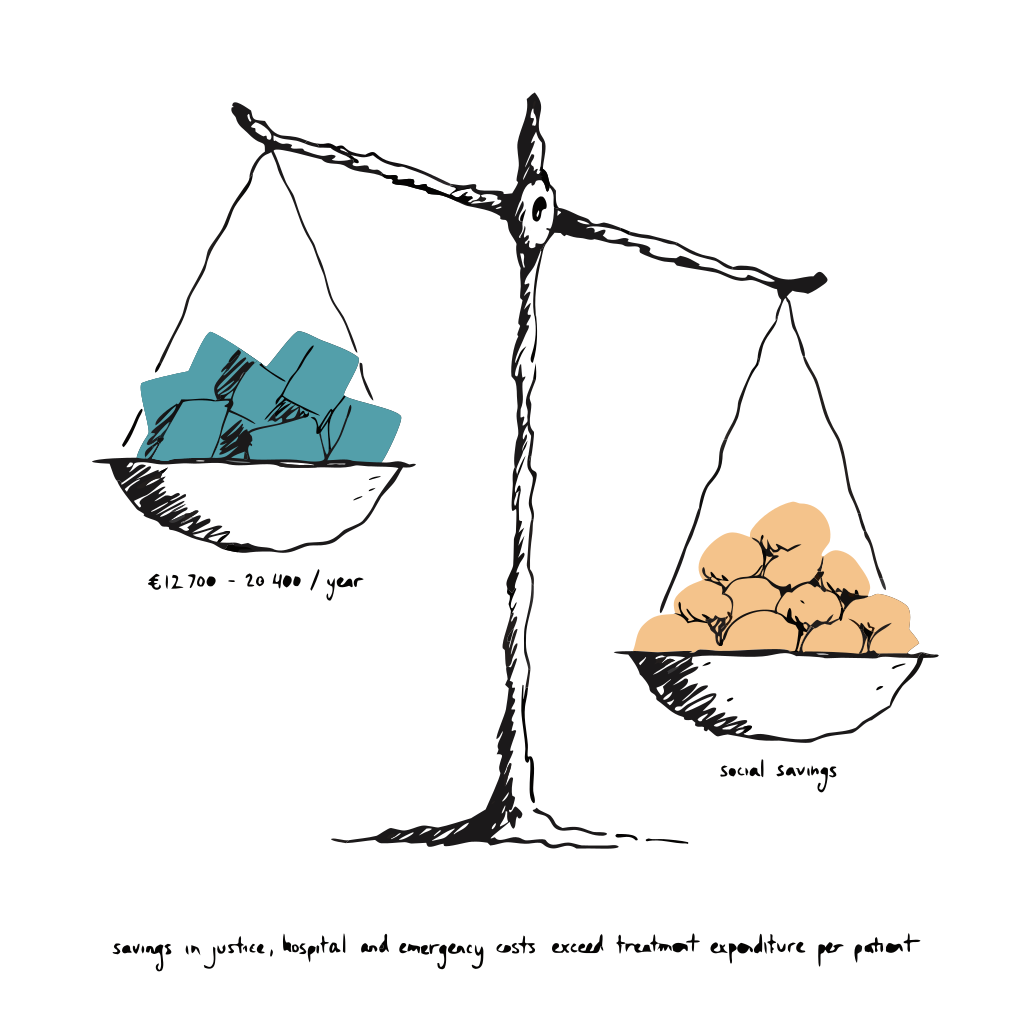
The crime dimension is perhaps the most counterintuitive finding. A 2022 systematic review by Smart and Reuter found that HAT patients commit roughly half the number of offences compared to those on methadone alone. The mechanism is structural: when supply is regulated and provided at no cost to the patient, the economic pressure that drives acquisitive crime to fund a street habit disappears. The social savings generated consistently exceed the cost of the treatment itself.
HAT patients also show measurable improvements in mental health and social reintegration — lower rates of anxiety and depression, greater housing stability, higher rates of employment engagement. The annual cost per patient ranges between €12,700 and €20,400, figures that are offset when set against reduced expenditure on hospitalisation, criminal justice, and emergency services.
The 2022 national survey by Gmel and Labhart confirmed that these outcomes have held over time. Treatment retention in HAT is higher than in conventional substitution programmes — a meaningful metric in a field where dropout rates are a primary driver of poor outcomes.
The design question
What makes the Swiss case analytically interesting is not that it legalised heroin. It did not. HAT is a narrowly targeted clinical intervention for a specific patient population that has exhausted conventional options. The drug never leaves the clinic. There is no black market diversion, no recreational access, no ideological concession. The question the programme answers is precise: can a state-regulated therapeutic supply produce better outcomes than an unregulated street supply for people already deeply embedded in both?
Thirty years of Swiss data answer yes — and the answer holds across health, crime, and cost dimensions simultaneously. That is rare in public policy.
The gap this exposes
Despite the evidence base, adoption beyond Switzerland has been slow and politically contested. Germany and the Netherlands have run controlled programmes with comparable results. Most jurisdictions have not moved.
Italy is a relevant case. The country operates a drug treatment system built primarily around methadone and buprenorphine — both effective for many patients, both insufficient for the subset who do not respond. In 2015, Italy recorded 305 overdose deaths, a figure that had been rising in preceding years. That same year, 27,718 individuals were reported to law enforcement for drug-related offences, with a significant increase among minors. Social reintegration programmes show variable results across regions. HAT has not been implemented.
The comparison is not straightforward — Italy and Switzerland differ in scale, institutional capacity, and drug epidemiology. But the structural logic applies: at equal levels of public expenditure, systems that include HAT as a treatment option show better aggregate outcomes than those that do not.
What the Swiss case actually demonstrates
European drug policy tends to move along two axes: criminalisation and conventional treatment. The Swiss case is evidence that a third axis exists — targeted, regulated, evidence-based therapeutic supply for a specific population that both alternatives have failed. It does not require a shift in overall drug policy philosophy. It requires a willingness to distinguish between what works for most patients and what works for the subset that most patients are not.
Switzerland did not wait for political consensus before running the pilot. It measured outcomes, built the evidence base, and institutionalised what worked. That sequence — empirical, incremental, honest about tradeoffs — is rarer in public policy than it should be. And the population it serves has been waiting, in most of Europe, for thirty years.